Welcome to WordPress. This is your first post. Edit or delete it, then start writing!
Author: admin
-
What Is a Forex Trading Strategy and Why Beginners Need One
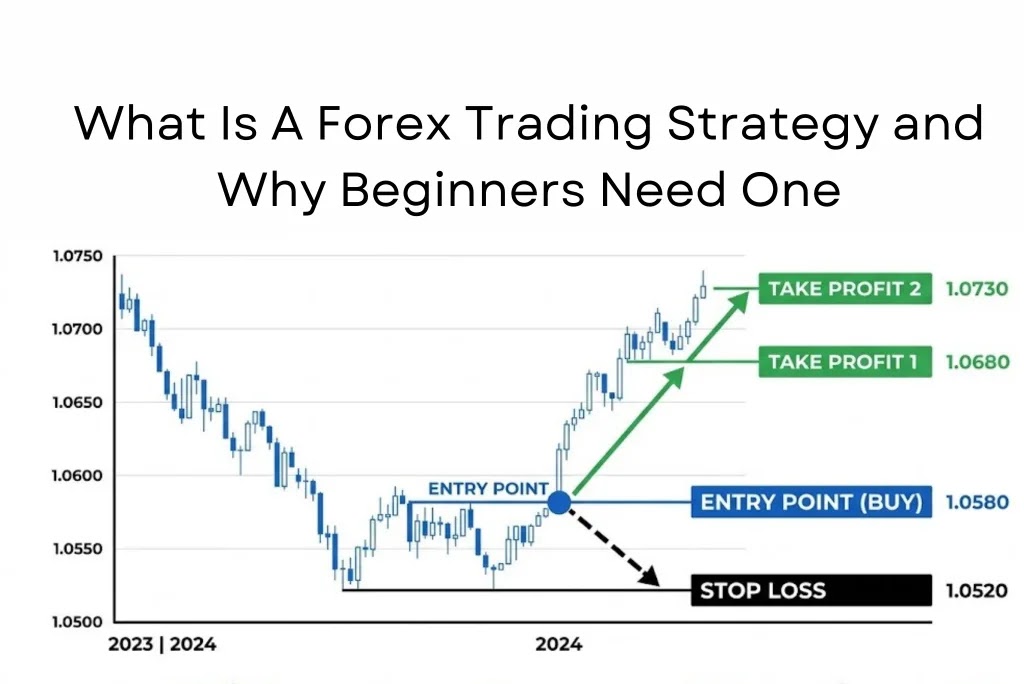
What Is a Forex Trading Strategy and Why Beginners Need One
Many beginner forex traders enter the market without a clear plan.
They open trades based on emotions, random signals, or social media tips.This usually leads to inconsistent results and unnecessary losses.
That is why every trader needs a forex trading strategy.
A trading strategy is a set of rules that helps traders decide when to enter and exit trades.
A good strategy gives structure and removes emotional decision-making from trading.
What Does a Trading Strategy Include
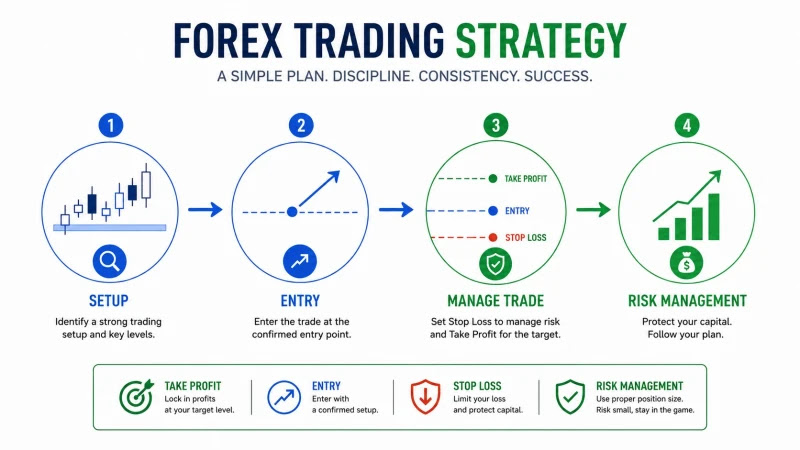
- Entry rules
- Exit rules
- Stop loss placement
- Take profit target
- Risk management rules
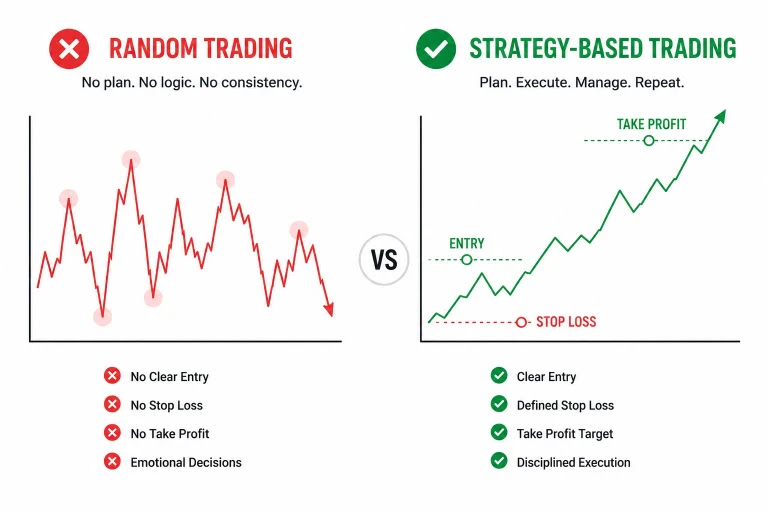
Without a strategy, traders often make random decisions and overtrade.
Why Beginners Need a Trading Strategy
- It improves discipline
- It reduces emotional trading
- It helps maintain consistency
- It makes risk management easier
Many successful traders use simple strategies instead of complex systems.
The key is not finding the “perfect strategy,” but following one strategy consistently.A simple strategy followed with discipline is better than a complicated strategy used emotionally.
How to Start Building a Simple Strategy
Beginners should start with basic concepts like:
- Support and resistance
- Trend direction
- Risk-reward ratio
- Trading sessions
It is also important to test a strategy on a demo account before using real money.
Remember, a trading strategy is not a magic formula.
It is a tool that helps traders stay disciplined and make better decisions over time. -
What is Liquidity in Forex (Buy Side & Sell Side Liquidity Explained)
What is Liquidity in Forex (Buy Side & Sell Side Liquidity Explained)
If you’ve ever wondered why price suddenly spikes above an old high or below an old low before reversing, the answer almost always comes down to one word: liquidity. Understanding liquidity is the single most important foundation for reading price action the way institutions and smart money do. In this post, we’ll break down exactly what liquidity means, where it forms on your chart, and why price is naturally drawn toward it.
What is Liquidity
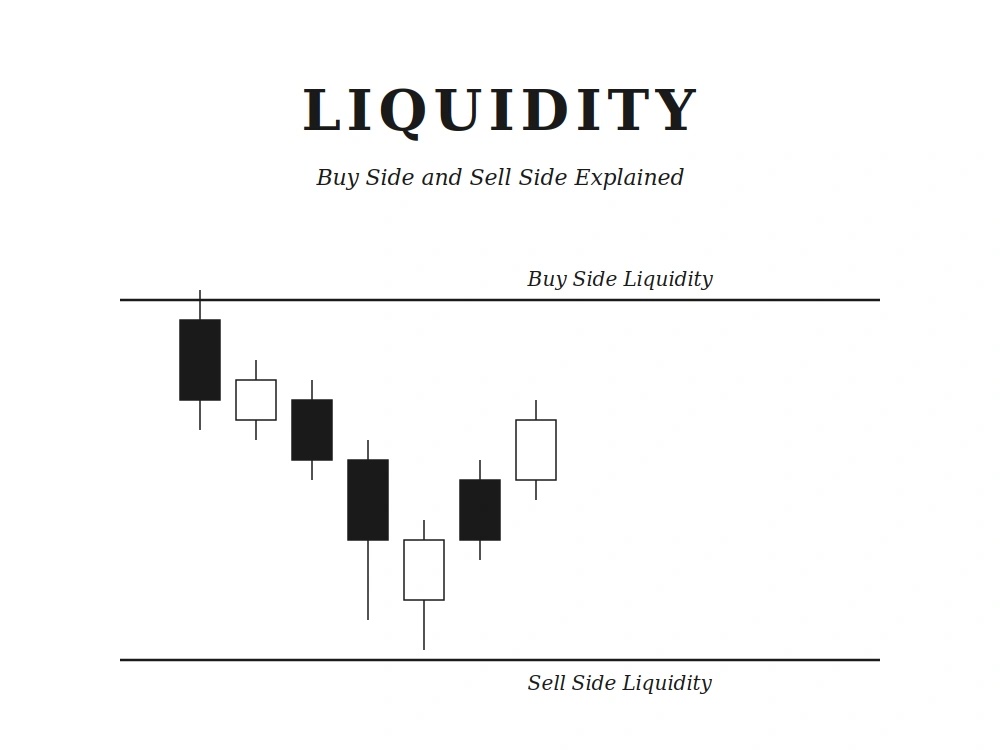
In forex, liquidity refers to areas on the chart where a large number of pending orders are resting — mainly stop-loss orders and breakout entry orders. Retail traders place these orders at fairly predictable spots: just above recent highs and just below recent lows. When enough traders do this, it creates a “pool” of orders sitting at that price level.
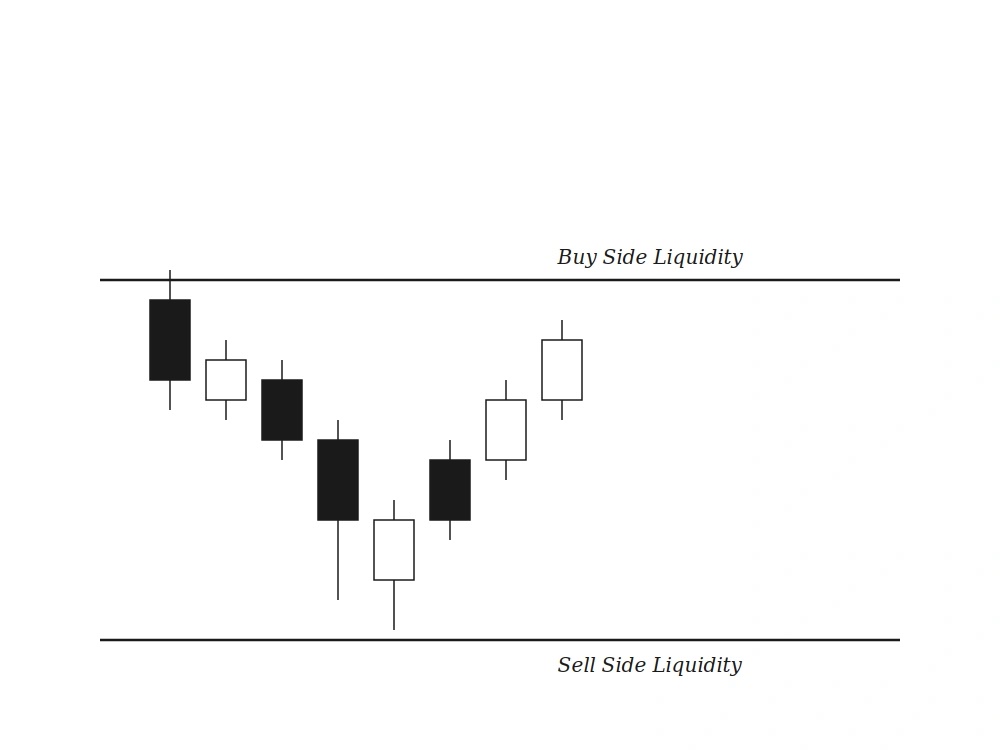
Large institutional players (banks, funds) need this pool of orders to fill their own massive positions without moving the market too much against themselves. This is why price often moves toward these levels — not randomly, but because that’s where the orders needed to fill big trades are sitting.
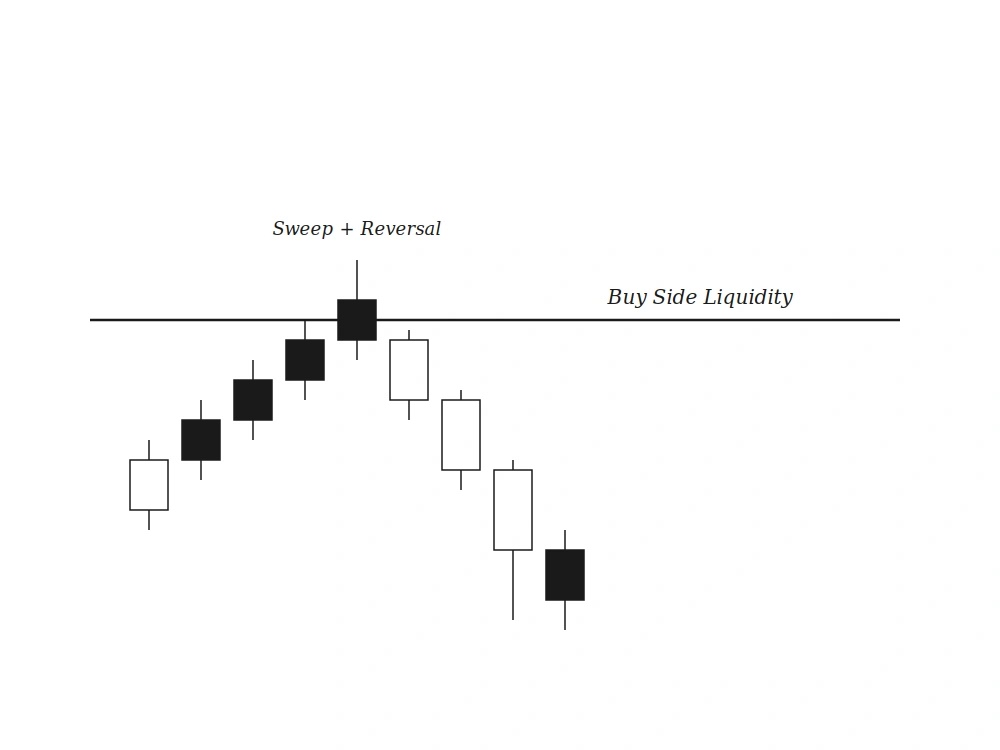
Buy Side Liquidity (BSL)
Buy Side Liquidity sits above previous swing highs. It’s made up of two main types of orders:
- Stop-loss orders of traders who are short (sold) and placed their stop above the high
- Breakout buy orders from traders expecting price to continue higher once that high is broken
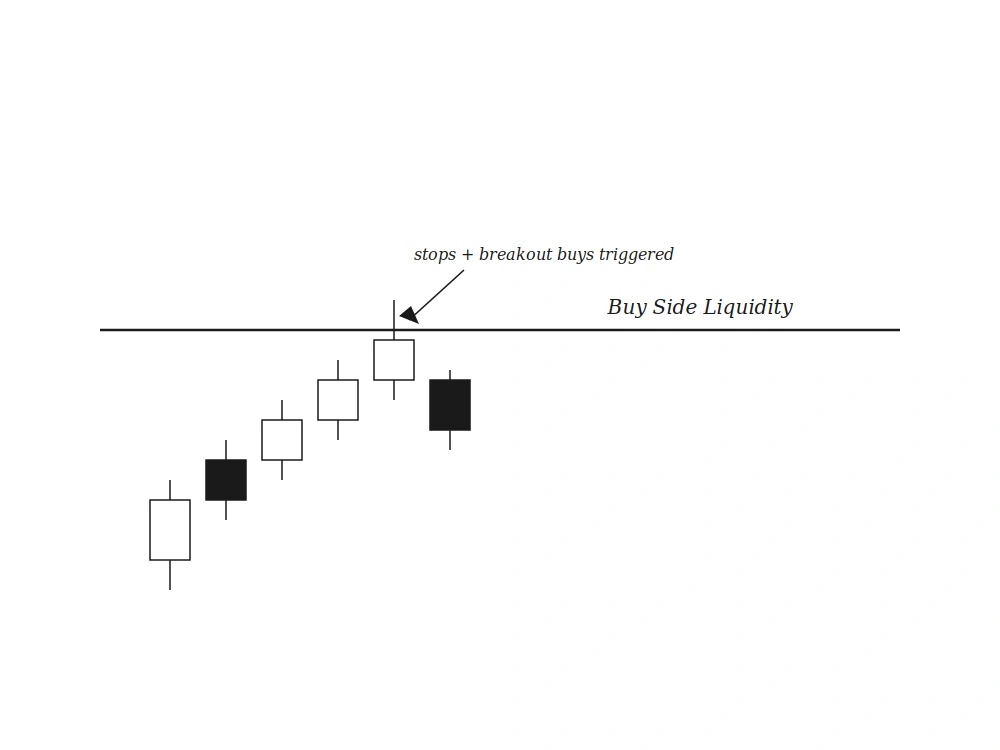
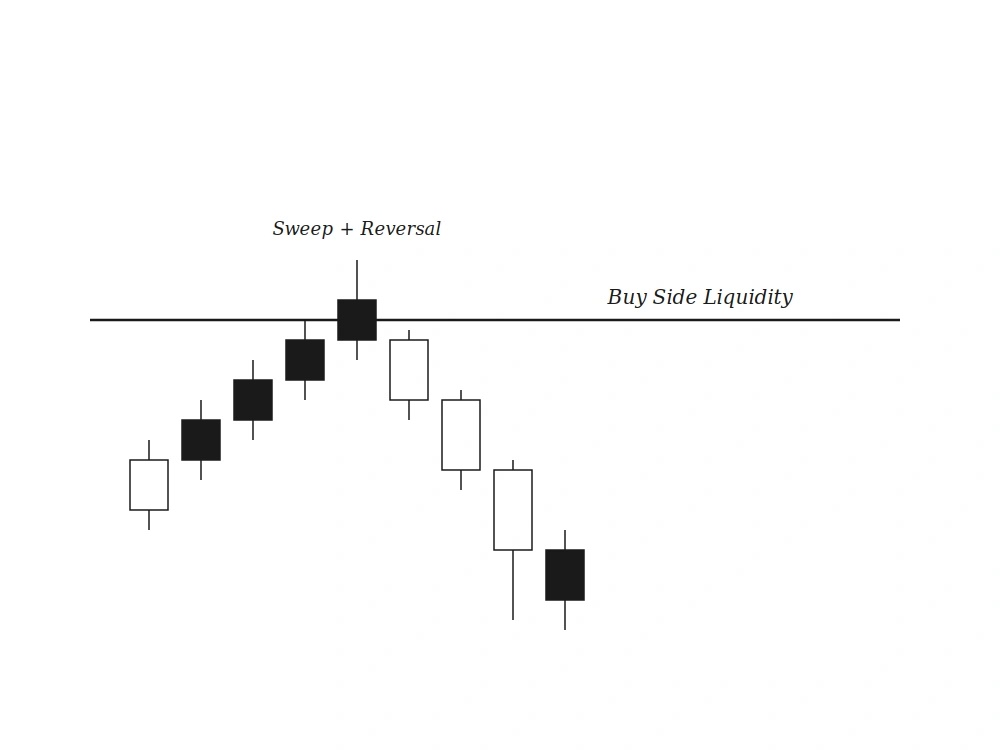
Because both of these order types are buy orders, price pushing above a high triggers a wave of buying — which is exactly why price often spikes above old highs before reversing down.
Sell Side Liquidity (SSL)
Sell Side Liquidity sits below previous swing lows, and works the same way in reverse:
- Stop-loss orders of traders who are long (bought) and placed their stop below the low
- Breakout sell orders from traders expecting price to continue lower once that low is broken
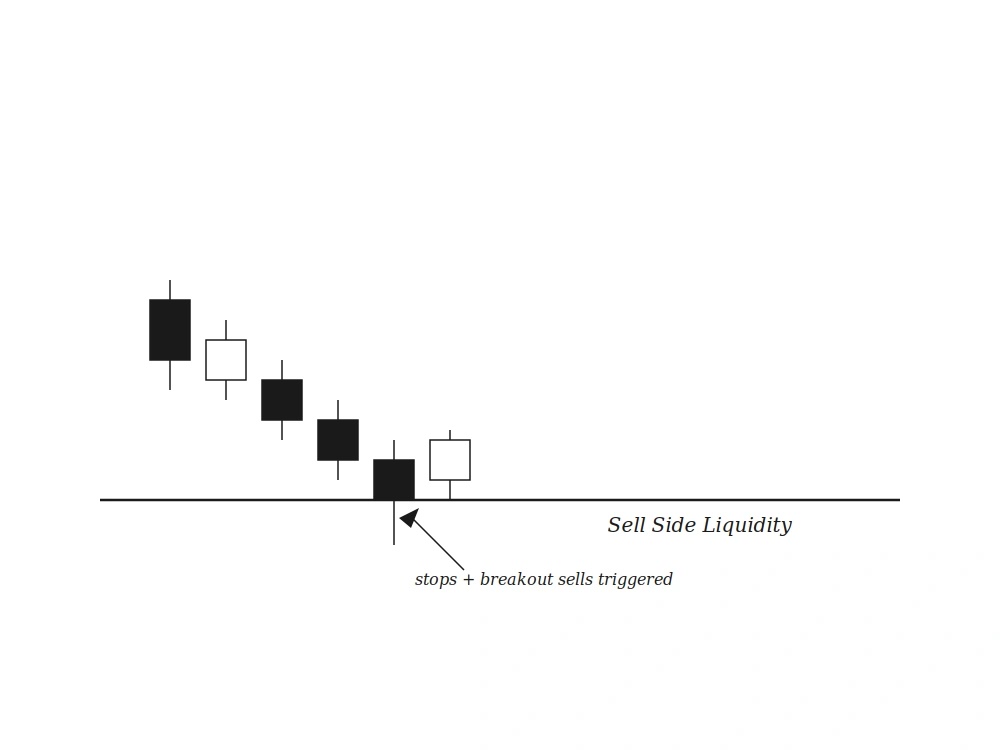
When price dips below an old low, it triggers a wave of selling — often causing a sharp move down before price reverses back up.
Why Liquidity Matters for Your Trading
Once you start marking Buy Side and Sell Side Liquidity on your charts, you’ll notice price constantly “reaching” for these levels — whether it’s the next old high or the next old low. This single concept explains a huge amount of price behavior that otherwise looks random, including:
- Why price often overshoots a support/resistance level before reversing
- Why breakouts frequently fail and reverse (“fakeouts”)
- Why institutional moves tend to target these specific zones instead of random price points
Liquidity Type Where It Forms Made Up Of Buy Side Liquidity Above previous swing highs Short stop-losses + breakout buy orders Sell Side Liquidity Below previous swing lows Long stop-losses + breakout sell orders Key Takeaway
Liquidity is simply where the orders are. Before analyzing any chart, start by marking the obvious highs and lows — these are your Buy Side and Sell Side Liquidity levels. Once you can spot these instantly, price movement starts making a lot more sense, and you’ll be ready to understand concepts like liquidity sweeps in the next post.
Risk note: Forex trading involves substantial risk of loss and is not suitable for every investor. This content is for educational purposes only and should not be considered financial advice. Always use proper risk management and trade with capital you can afford to lose.
-
What is Liquidity in Forex (Buy Side & Sell Side Liquidity Explained)
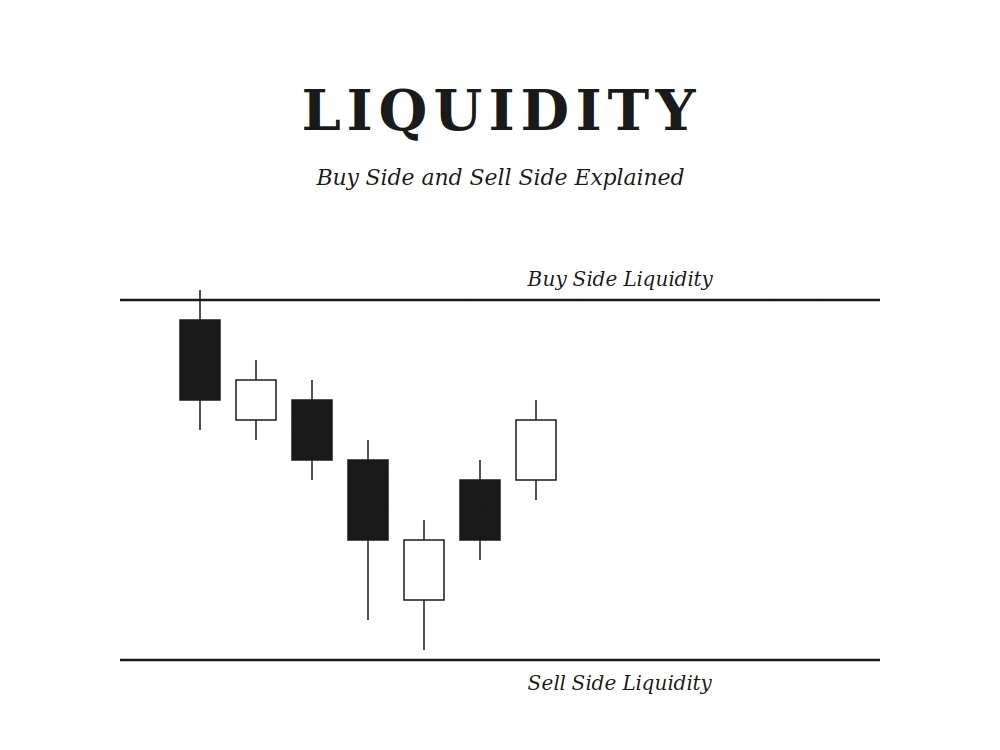
What is Liquidity in Forex (Buy Side & Sell Side Liquidity Explained)
If you’ve ever wondered why price suddenly spikes above an old high or below an old low before reversing, the answer almost always comes down to one word: liquidity. Understanding liquidity is the single most important foundation for reading price action the way institutions and smart money do. In this post, we’ll break down exactly what liquidity means, where it forms on your chart, and why price is naturally drawn toward it.
What is Liquidity
In forex, liquidity refers to areas on the chart where a large number of pending orders are resting — mainly stop-loss orders and breakout entry orders. Retail traders place these orders at fairly predictable spots: just above recent highs and just below recent lows. When enough traders do this, it creates a “pool” of orders sitting at that price level.
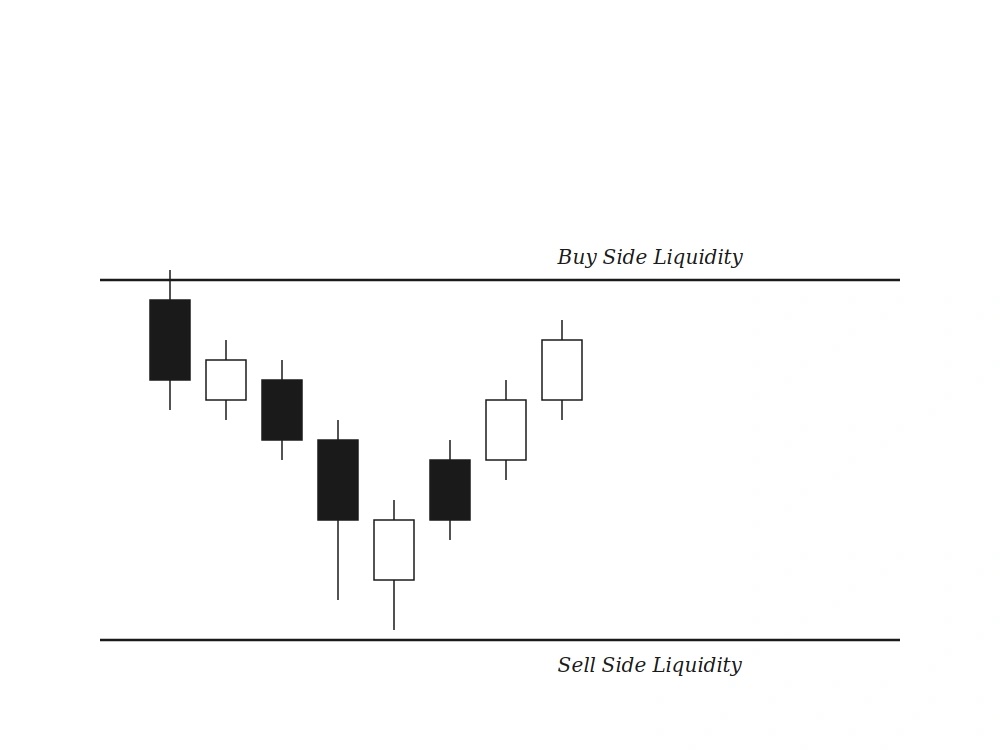
Large institutional players (banks, funds) need this pool of orders to fill their own massive positions without moving the market too much against themselves. This is why price often moves toward these levels — not randomly, but because that’s where the orders needed to fill big trades are sitting.
Buy Side Liquidity (BSL)
Buy Side Liquidity sits above previous swing highs. It’s made up of two main types of orders:
- Stop-loss orders of traders who are short (sold) and placed their stop above the high
- Breakout buy orders from traders expecting price to continue higher once that high is broken
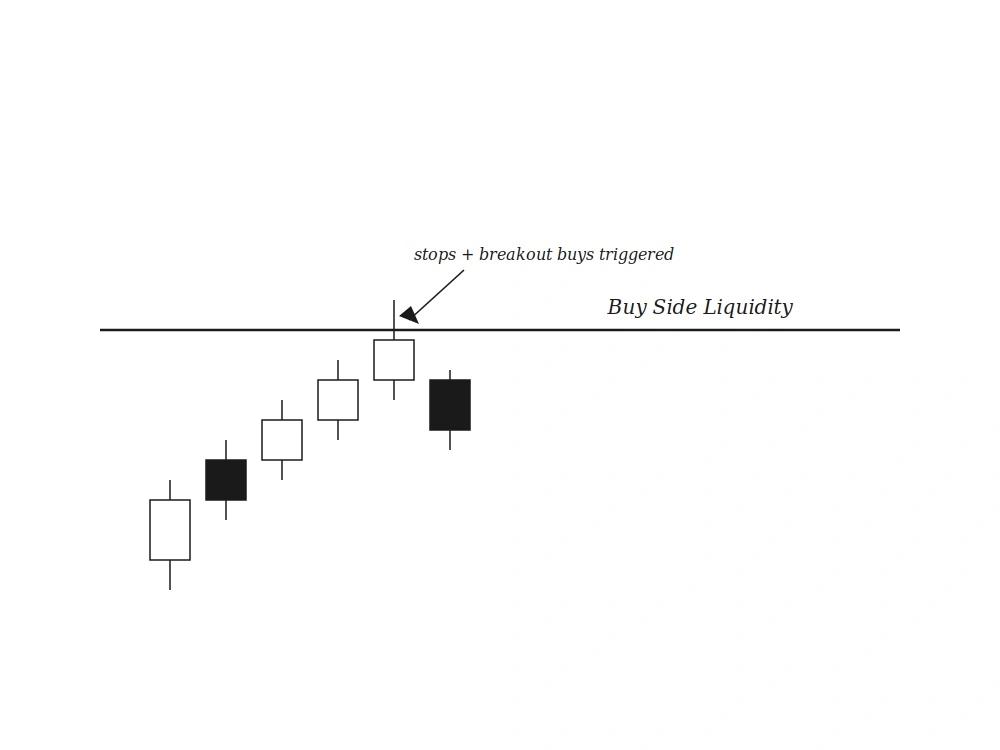
Because both of these order types are buy orders, price pushing above a high triggers a wave of buying — which is exactly why price often spikes above old highs before reversing down.
Sell Side Liquidity (SSL)
Sell Side Liquidity sits below previous swing lows, and works the same way in reverse:
- Stop-loss orders of traders who are long (bought) and placed their stop below the low
- Breakout sell orders from traders expecting price to continue lower once that low is broken
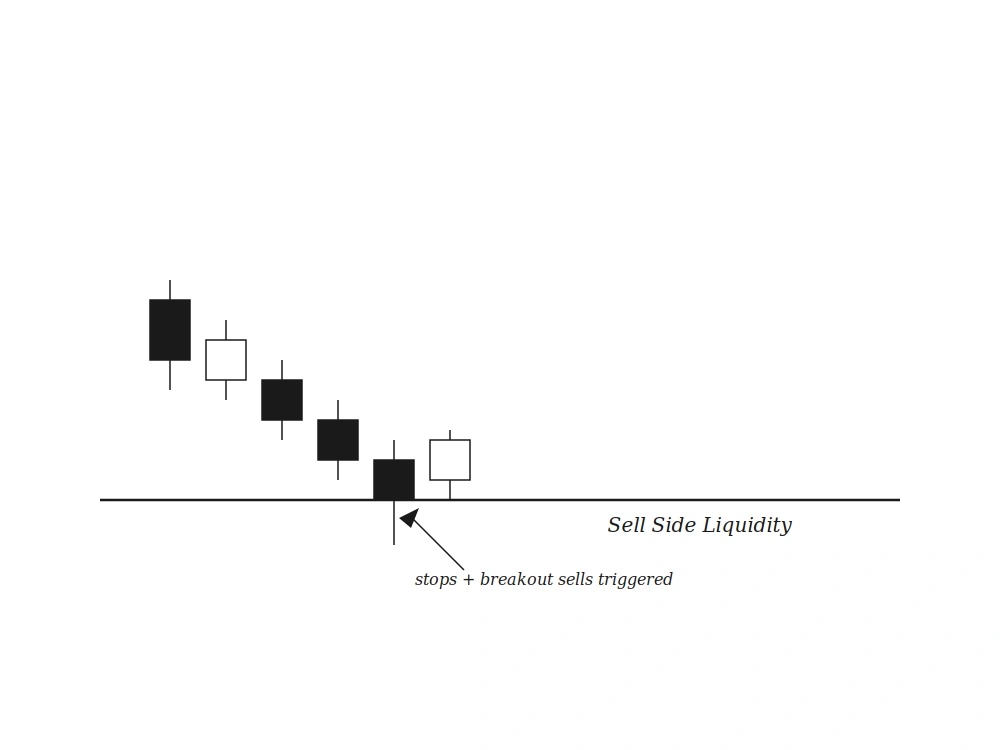
When price dips below an old low, it triggers a wave of selling — often causing a sharp move down before price reverses back up.
Why Liquidity Matters for Your Trading
Once you start marking Buy Side and Sell Side Liquidity on your charts, you’ll notice price constantly “reaching” for these levels — whether it’s the next old high or the next old low. This single concept explains a huge amount of price behavior that otherwise looks random, including:
- Why price often overshoots a support/resistance level before reversing
- Why breakouts frequently fail and reverse (“fakeouts”)
- Why institutional moves tend to target these specific zones instead of random price points
Liquidity Type Where It Forms Made Up Of Buy Side Liquidity Above previous swing highs Short stop-losses + breakout buy orders Sell Side Liquidity Below previous swing lows Long stop-losses + breakout sell orders Key Takeaway
Liquidity is simply where the orders are. Before analyzing any chart, start by marking the obvious highs and lows — these are your Buy Side and Sell Side Liquidity levels. Once you can spot these instantly, price movement starts making a lot more sense, and you’ll be ready to understand concepts like liquidity sweeps in the next post.
Risk note: Forex trading involves substantial risk of loss and is not suitable for every investor. This content is for educational purposes only and should not be considered financial advice. Always use proper risk management and trade with capital you can afford to lose.
-
What Is a Pip in Forex Trading Simple Beginner Guide
What Is a Pip in Forex Trading Simple Beginner Guide
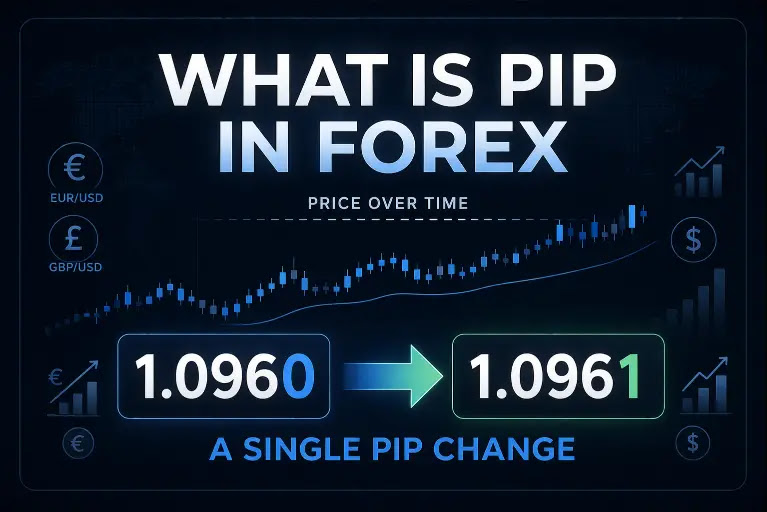
In Forex trading, a pip is one of the most important basic terms every beginner should understand.
Pips are used to measure how much a currency pair moves in price. Traders use pips to calculate profit, loss, stop loss, and take profit.
In this simple beginner guide, you will learn what a pip is, how it works, and why it is important in Forex trading.
What Is a Pip in Forex
Pip stands for Percentage in Point.
In simple words, a pip is the smallest standard price movement in most currency pairs.
In most Forex pairs, a pip is usually the 4th decimal place.
Example:
- EUR/USD moves from 1.1000 to 1.1001
- This is a move of 1 pip
So, if the price changes by one small step in the 4th decimal place, that is usually 1 pip.
Simple Example of a Pip
Let’s look at an easy example:
- GBP/USD = 1.2500
- GBP/USD moves to 1.2505
This means the price moved 5 pips.
Another example:
- EUR/USD = 1.1050
- EUR/USD moves to 1.1040
This means the price moved 10 pips down.
What Is a Pipette
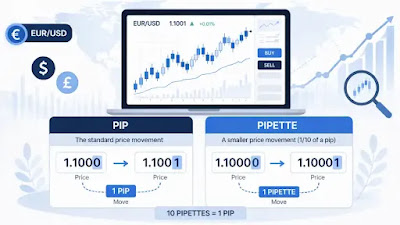
Sometimes brokers show an extra decimal place in the price.
This extra small movement is called a pipette.
A pipette is 1/10 of a pip.
Example:
- EUR/USD = 1.10000
- EUR/USD moves to 1.10001
This is 1 pipette, not 1 full pip.
So:
- 10 pipettes = 1 pip
How Pips Work in Forex Trading
Every time the price of a currency pair moves, traders measure that movement in pips.
- If price goes up and you placed a buy trade, you may gain pips
- If price goes down and you placed a sell trade, you may gain pips
- If price moves against your trade, you lose pips
This is why pips are very important in every trade.
Why Is Pip Important in Forex Trading
Pips help traders understand market movement clearly.
1. Measure Profit and Loss
Traders use pips to know how much they gained or lost in a trade.
Example:
- You enter a trade at 1.1000
- You close at 1.1015
- Your trade moved 15 pips
2. Set Stop Loss and Take Profit
Most traders set their stop loss and take profit using pips.
Example:
- Stop Loss = 20 pips
- Take Profit = 40 pips
This helps with better risk management.
3. Build Trading Strategy
Many Forex strategies are based on pip movement.
Some traders target 10 pips, 20 pips, or 50 pips depending on their trading style.
How to Calculate Pip Value
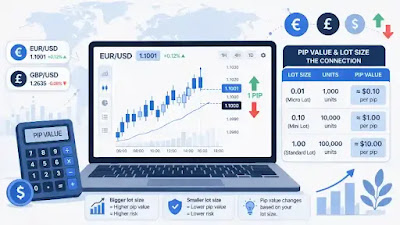
Pip value means how much money 1 pip is worth in your trade.
Pip value depends on:
- Lot size
- Currency pair
- Your account currency
For many USD-based pairs, beginners can use this simple idea:
- 0.01 lot (Micro Lot) = about $0.10 per pip
- 0.10 lot (Mini Lot) = about $1 per pip
- 1.00 lot (Standard Lot) = about $10 per pip
This is a simple beginner example and may be slightly different depending on the pair and broker.
Pip and Lot Size Connection
Pips and lot size always work together.
If you use a bigger lot size, each pip becomes more valuable.
If you use a smaller lot size, each pip has less value and lower risk.
Simple idea:
- Bigger lot size = Bigger pip value = Higher risk
- Smaller lot size = Smaller pip value = Lower risk
Real Beginner Example
Let’s say you open a trade on EUR/USD with 0.01 lot.
- You buy at 1.1000
- Price moves to 1.1010
The market moved 10 pips.
If your pip value is around $0.10 per pip, then:
- 10 pips x $0.10 = about $1 profit
This simple example helps beginners understand how pip movement connects to money.
Common Mistake Beginners Make
One common mistake is focusing only on money and not on pips.
Good traders first understand:
- How many pips they want to risk
- Where the stop loss should be
- How much each pip is worth
This is much safer than opening random trades.
Beginner Tips About Pips
- Learn pip movement before real trading
- Practice on a demo account first
- Use small lot size when starting
- Always calculate stop loss in pips
- Understand pip value before opening a trade
Final Thoughts
A pip is a small unit that shows how much a currency pair moves in Forex trading.
It may look simple, but it is one of the most important parts of understanding profit, loss, and risk.
For beginners, learning pips is a strong first step before moving to lot size, leverage, and full trade planning.
If you understand pips well, you can understand Forex trading much more clearly.
-
Forex Leverage Explained for Beginners
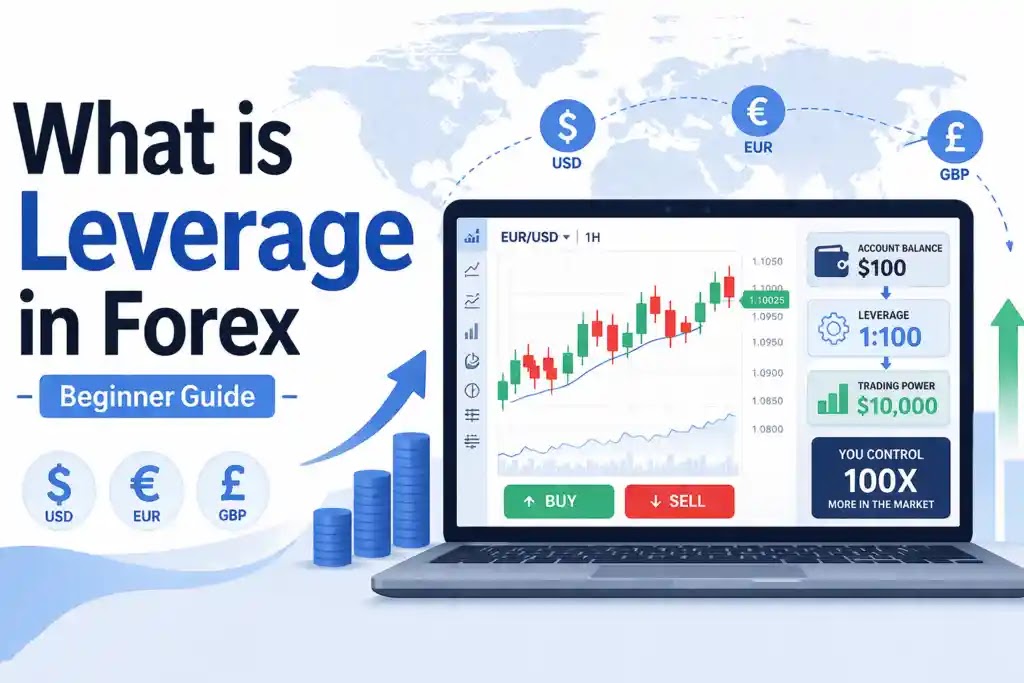
What is Leverage in Forex A Beginner Guide
Leverage is one of the most important concepts in Forex trading, especially for beginners. It gives traders the ability to control a larger trading position with a smaller amount of money. This is one reason why Forex trading attracts many new traders.
However, leverage is a double-edged sword. While it can increase potential profits, it can also increase potential losses. If you do not understand how leverage works, it can become risky very quickly.
In this beginner-friendly guide, you will learn what leverage in Forex means, how it works, why it is risky, and how beginners can use it more safely.
What is Leverage in Forex
In simple words, leverage in Forex means using borrowed funds from your broker to open a trade that is larger than your actual account balance.
This allows traders to enter bigger positions in the market without needing to deposit the full amount of money required for the trade.
For example, if your broker offers leverage of 1:100, it means for every $1 in your account, you can control $100 in the Forex market.
Simple definition: Leverage allows you to trade a bigger position with a smaller investment.
How Does Leverage Work in Forex
Leverage works by increasing your buying power. Instead of trading only with the money you have in your account, your broker lets you control a much larger position.
Let’s look at a simple example:
- Your account balance: $100
- Leverage: 1:100
- Total market position you can control: $10,000
This means your trading power becomes 100 times larger than your account balance.
That sounds powerful, but it also means even a small market move can have a big impact on your account.
Example of Leverage in Forex
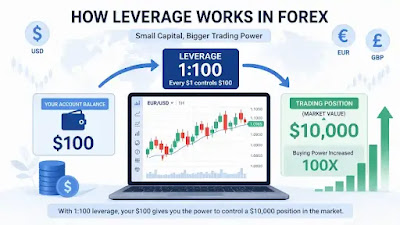
Suppose you open a trade using leverage:
- You have $100 in your account
- Your broker offers 1:100 leverage
- You open a position worth $10,000
If the market moves in your favor, your profit can be much higher compared to trading without leverage.
But if the market moves against you, your loss will also be much larger. This is why leverage can be useful, but also dangerous if not managed correctly.
Common Leverage Ratios in Forex
Different brokers offer different leverage levels. Some common leverage ratios include:
- 1:10 – Low leverage
- 1:20 – Beginner-friendly leverage
- 1:50 – Medium leverage
- 1:100 – High leverage
- 1:500 – Very high leverage
Higher leverage gives you more trading power, but it also increases the risk. Beginners should avoid very high leverage until they fully understand risk management.
What is Margin in Forex
Margin is the amount of money required to open and maintain a leveraged trade. It is closely connected to leverage.
In simple words, margin is the small portion of your own money that your broker blocks to keep the trade open.
Here is the relationship:
- Higher leverage = Lower margin required
- Lower leverage = Higher margin required
For example, with higher leverage, you need less money to control a larger position. This makes trading more accessible, but it also increases the chance of larger losses.
Why is Leverage Risky in Forex Trading
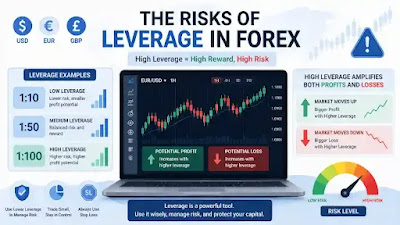
Leverage is powerful, but it is also one of the main reasons many beginners lose money in Forex trading. Here are the biggest risks:
1. Bigger Losses
Leverage multiplies losses just like it multiplies profits. Even a small market move against your trade can create a large loss.
2. Emotional Trading
When traders use high leverage, price movements feel more intense. This often causes fear, stress, and emotional decisions such as closing trades too early or revenge trading.
3. Account Blow Risk
Many beginner traders lose their accounts because they use too much leverage. A few bad trades with high leverage can quickly wipe out a small account.
Safe Leverage for Beginners
If you are new to Forex trading, it is better to use low leverage and focus on learning first.
For most beginners, safer leverage levels are:
- 1:10
- 1:20
Low leverage gives you more control and reduces the chance of large losses. It also helps you learn proper trading habits without putting too much pressure on your account.
How to Use Leverage Safely
Leverage can be useful if you use it carefully. Here are some beginner-friendly safety tips:
- Use low leverage in the beginning
- Always trade with a stop loss
- Never risk more than 1% to 2% of your account on one trade
- Avoid opening large positions just because leverage is available
- Practice first on a demo account
- Focus on consistency, not fast profits
Final Thoughts
Leverage in Forex trading can help you control bigger positions with a smaller amount of money. It can increase your trading opportunities, but it also increases risk.
For beginners, the best approach is to use leverage carefully, choose lower leverage ratios, and always manage risk properly. Understanding leverage before using it in a live account can help you avoid costly mistakes.
If you are just starting in Forex, remember this simple rule: leverage is a tool, not a shortcut to quick profit.
-
What is Spread in Forex A Beginner Guide
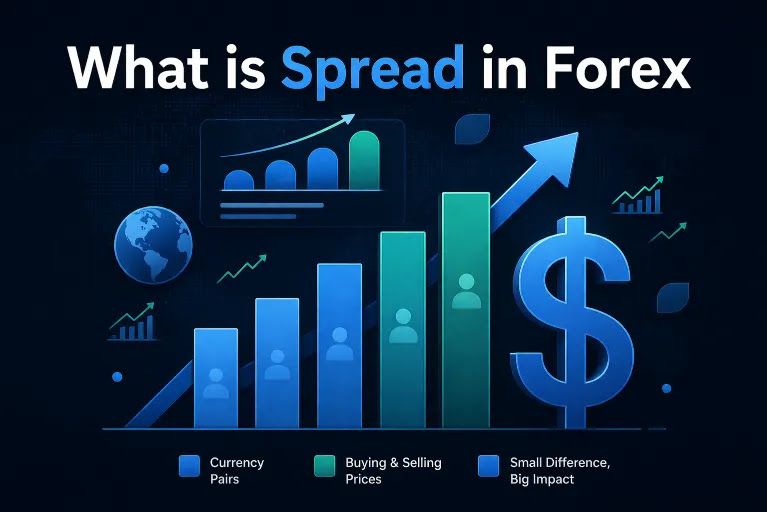
What is Spread in Forex A Beginner Guide
If you are new to Forex trading, one of the most important terms you need to understand is the spread. Many beginners focus only on buying and selling, but they often forget that every trade has a cost. In Forex trading, one of the most common trading costs is called the spread.
In simple words, the spread in Forex is the difference between the buy price (ask price) and the sell price (bid price) of a currency pair. This small price difference is how many brokers make money when traders open and close positions.
For example, if the EUR/USD currency pair shows a buy price of 1.1002 and a sell price of 1.1000, the difference between these two prices is 2 pips. That difference is called the Forex spread.
What Does Spread Mean in Simple Words
In simple English, spread is the small gap between the price at which you can buy a currency pair and the price at which you can sell it at the same moment. It is one of the first costs you pay when you enter a Forex trade.
This means when you open a trade, the position usually starts with a small negative value because of the spread. The market needs to move in your favor first before you can reach break-even and then profit.
Understanding spread is very important for beginners because it affects every trade you take. If you ignore spread, you may find it harder to manage entries, exits, and overall trading costs.
-
Demo Account Explained for Beginners
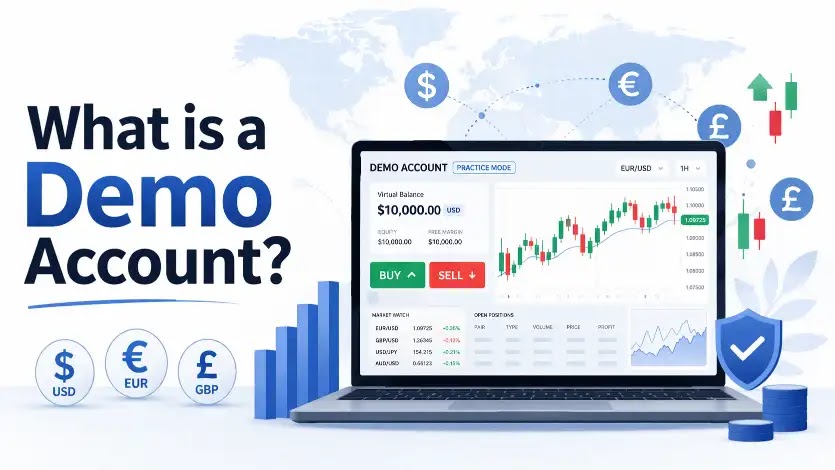
What is a Demo Account A Simple Beginner’s Guide
If you are new to Forex trading, one of the first things you may hear about is a demo account. Many beginners use a demo account before trying live trading because it helps them understand how the market works without using real money.
A demo account is a practice trading account provided by many brokers. It allows users to trade in real market conditions using virtual money instead of real funds. In simple words, a demo account helps beginners learn how to place trades, read charts, and test trading platforms in a risk-free environment.
For new traders, a demo account is often the best way to start. It gives you the chance to explore the basics of Forex trading, understand how buy and sell orders work, and become more comfortable with the trading platform before moving to a real account.
What Does a Demo Account Mean in Simple Words

In simple English, a demo account is a trial trading account. It looks and works like a real trading account, but the money inside it is not real. This means you can practice trading without the risk of losing your own money.
For example, if a broker gives you a demo balance of $10,000 virtual funds, you can use that balance to open and close trades just like in a real market. This makes a demo account a useful learning tool for beginners who want to understand Forex trading step by step.


