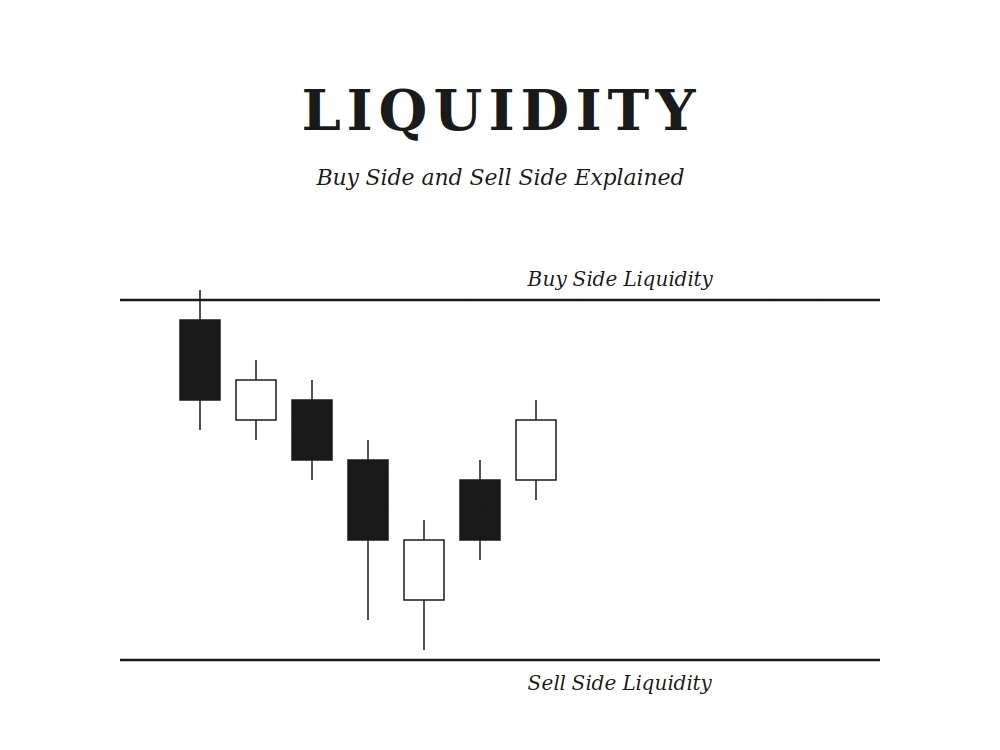
What is Liquidity in Forex (Buy Side & Sell Side Liquidity Explained)
If you’ve ever wondered why price suddenly spikes above an old high or below an old low before reversing, the answer almost always comes down to one word: liquidity. Understanding liquidity is the single most important foundation for reading price action the way institutions and smart money do. In this post, we’ll break down exactly what liquidity means, where it forms on your chart, and why price is naturally drawn toward it.
What is Liquidity
In forex, liquidity refers to areas on the chart where a large number of pending orders are resting — mainly stop-loss orders and breakout entry orders. Retail traders place these orders at fairly predictable spots: just above recent highs and just below recent lows. When enough traders do this, it creates a “pool” of orders sitting at that price level.
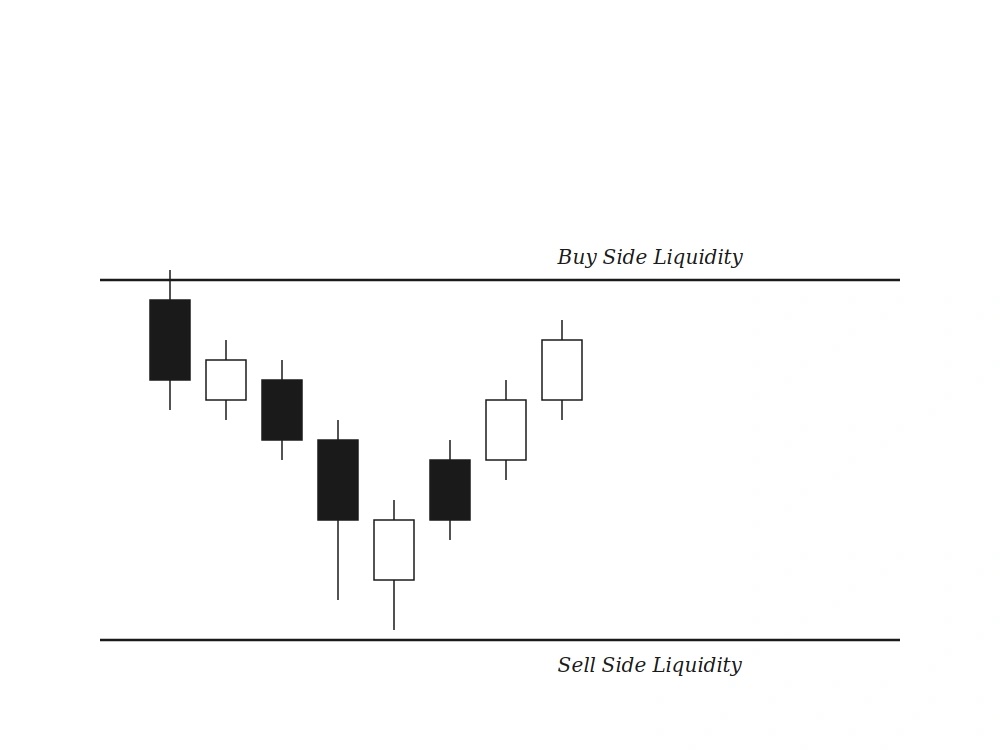
Large institutional players (banks, funds) need this pool of orders to fill their own massive positions without moving the market too much against themselves. This is why price often moves toward these levels — not randomly, but because that’s where the orders needed to fill big trades are sitting.
Buy Side Liquidity (BSL)
Buy Side Liquidity sits above previous swing highs. It’s made up of two main types of orders:
- Stop-loss orders of traders who are short (sold) and placed their stop above the high
- Breakout buy orders from traders expecting price to continue higher once that high is broken
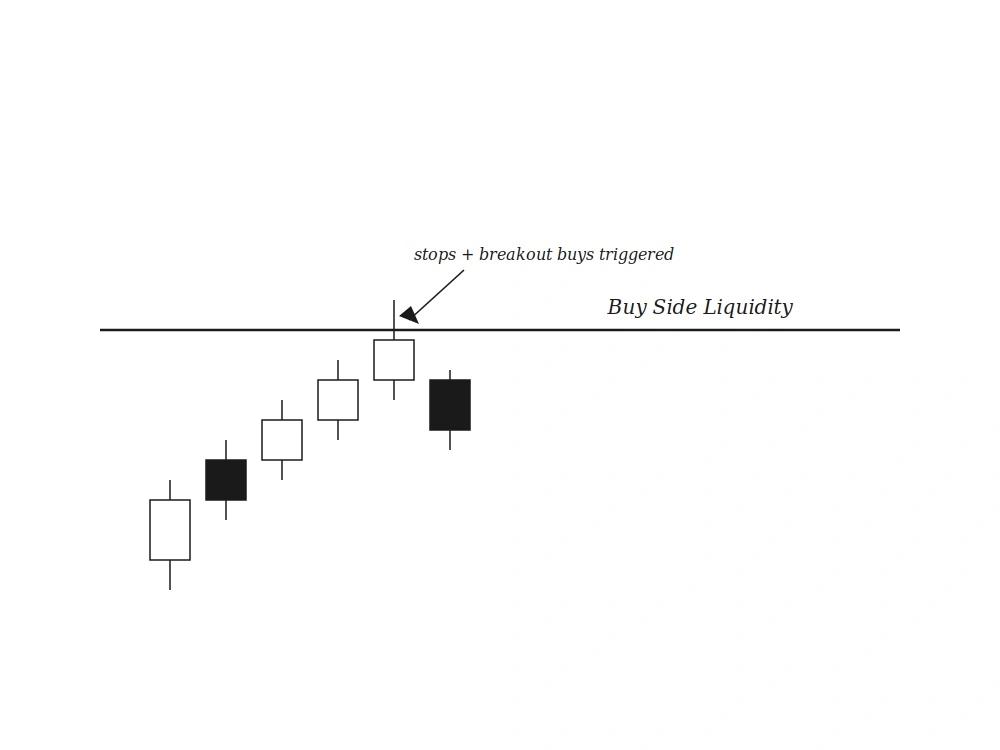
Because both of these order types are buy orders, price pushing above a high triggers a wave of buying — which is exactly why price often spikes above old highs before reversing down.
Sell Side Liquidity (SSL)
Sell Side Liquidity sits below previous swing lows, and works the same way in reverse:
- Stop-loss orders of traders who are long (bought) and placed their stop below the low
- Breakout sell orders from traders expecting price to continue lower once that low is broken
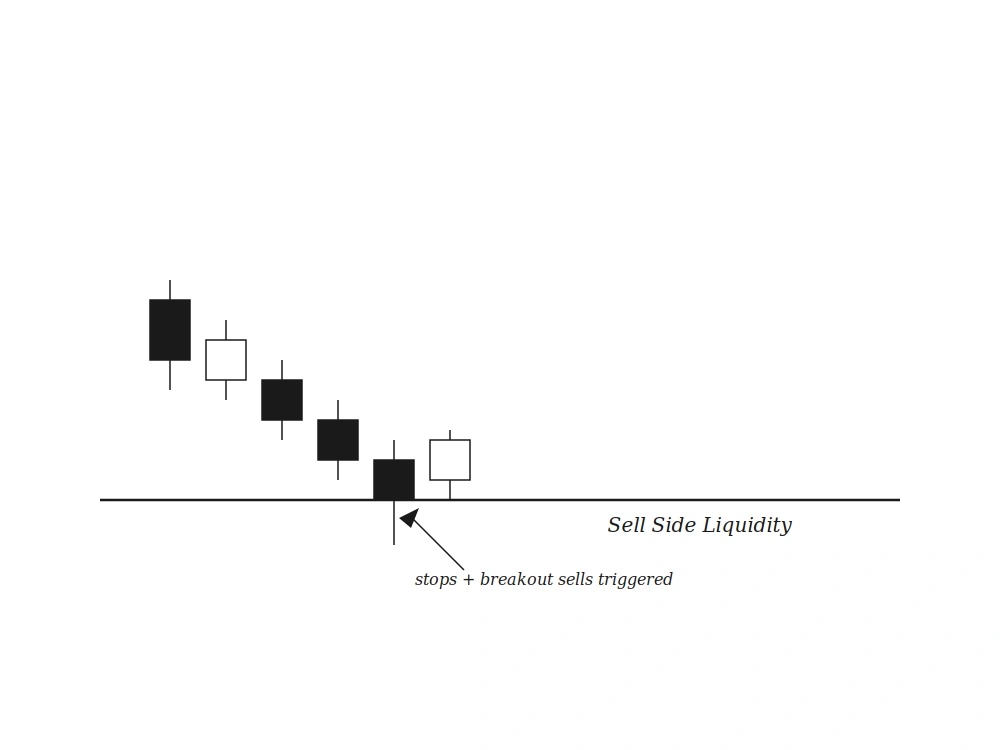
When price dips below an old low, it triggers a wave of selling — often causing a sharp move down before price reverses back up.
Why Liquidity Matters for Your Trading
Once you start marking Buy Side and Sell Side Liquidity on your charts, you’ll notice price constantly “reaching” for these levels — whether it’s the next old high or the next old low. This single concept explains a huge amount of price behavior that otherwise looks random, including:
- Why price often overshoots a support/resistance level before reversing
- Why breakouts frequently fail and reverse (“fakeouts”)
- Why institutional moves tend to target these specific zones instead of random price points
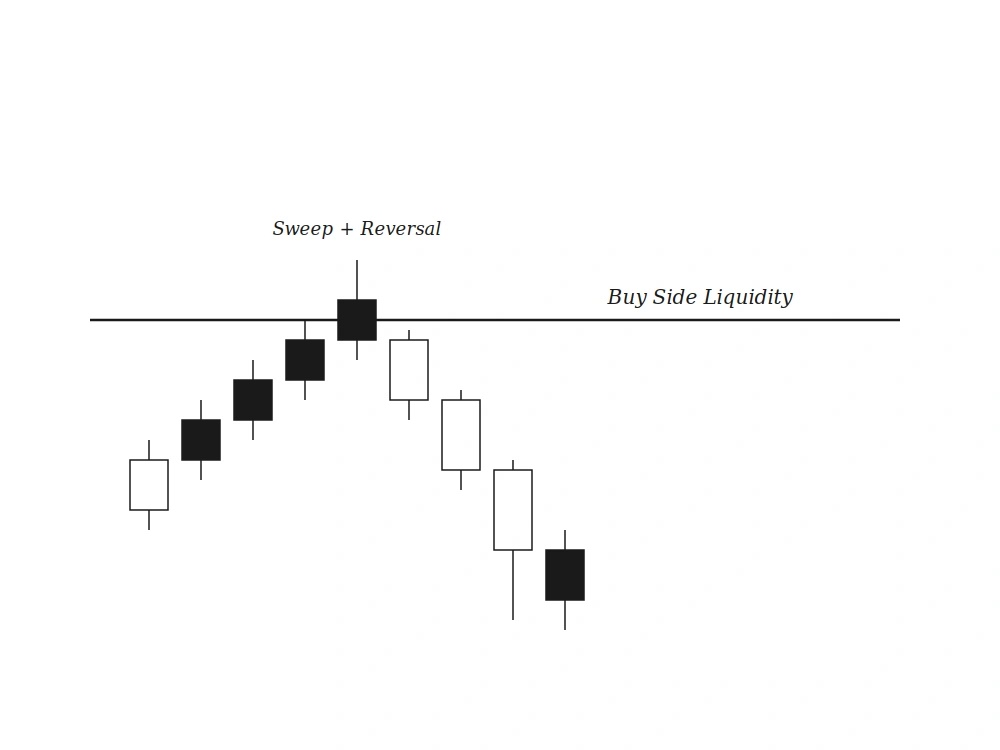
| Liquidity Type | Where It Forms | Made Up Of |
|---|---|---|
| Buy Side Liquidity | Above previous swing highs | Short stop-losses + breakout buy orders |
| Sell Side Liquidity | Below previous swing lows | Long stop-losses + breakout sell orders |
Key Takeaway
Liquidity is simply where the orders are. Before analyzing any chart, start by marking the obvious highs and lows — these are your Buy Side and Sell Side Liquidity levels. Once you can spot these instantly, price movement starts making a lot more sense, and you’ll be ready to understand concepts like liquidity sweeps in the next post.
Risk note: Forex trading involves substantial risk of loss and is not suitable for every investor. This content is for educational purposes only and should not be considered financial advice. Always use proper risk management and trade with capital you can afford to lose.
Leave a Reply